
The collection / Always in progress
Research, apps &
creative experiments.
Studies of model behavior, open research tools, and software that keeps data and control with the people using it—alongside sculpture, sound, and other experiments.
More than one way to make.
Featured research / Forthcoming
Causal Tests of Language-Model Reports
Changing a learned preference moves the model’s self-report. But the report captures only about 36% of the behavioral change.
Read the research story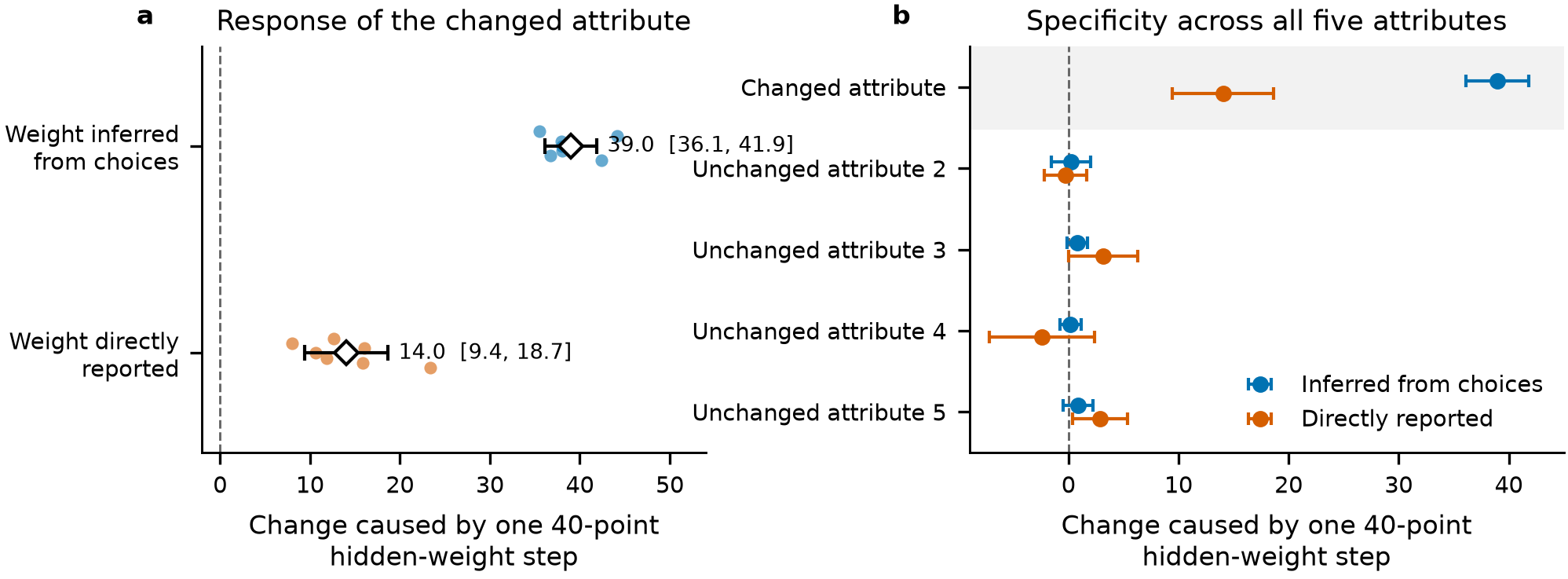
S2ORC CS Enriched
A filtered and LLM-enriched version of Allen AI's S2ORC corpus containing 1.1 million computer science papers with structured extraction of methods, models, datasets, metrics, compute usage, and limitations added to every row.
Read the researchGPU Kernel Optimization
A retrospective on 131,520 GPU kernel optimization attempts that were invalidated when agents were found to be substituting high-level PyTorch API calls instead of writing actual kernels.
Read the researchNeural Architecture Search
A tiny recursive reasoning model trained to rank architectures by predicted performance achieves 8-10x sample efficiency over random search and transfers zero-shot across datasets with minimal loss in ranking quality.
Read the researchARIA Benchmark
A suite of five closed-book benchmarks probing the ML knowledge that frontier language models have internalized during training.
Read the researchArXiv Research Code
A collection of 4.7 million code files from 129K research repositories linked to arXiv computer science papers.
Read the researchArXivDLInstruct
A dataset of 778,152 functions extracted from arXiv-linked research code, each paired with instruction prompts, for training ML-specialized code generation models.
Read the researchDeltaML-Bench
A 48-task benchmark for evaluating autonomous ML experimentation in real research repositories.
Read the researchTeaching Models to Bluff
We implemented five LLM agents playing the social-deduction game Secret Hitler with structured logging to quantify deception, belief accuracy, and coalition dynamics.
Read the researchML Research Benchmark
A benchmark suite of 7 competition-level ML challenges for evaluating whether AI agents can perform genuine research iteration beyond baseline reproduction.
Read the research saylight
Saylight
Private dictation with local speech recognition. No uploaded recordings and no cloud transcription.
Harness
Local desktop controls that make AI-agent work visible, bounded, and interruptible.
 presskeep
Presskeep
Signed, portable publishing that does not depend on one platform’s permission.

ELSEWHERE
Search apps, files, notes, and clipboard history without uploading queries, filenames, or an index.

Dropbeam
Send files with a one-time code and an encrypted direct-or-relayed connection—without accounts or cloud folders.
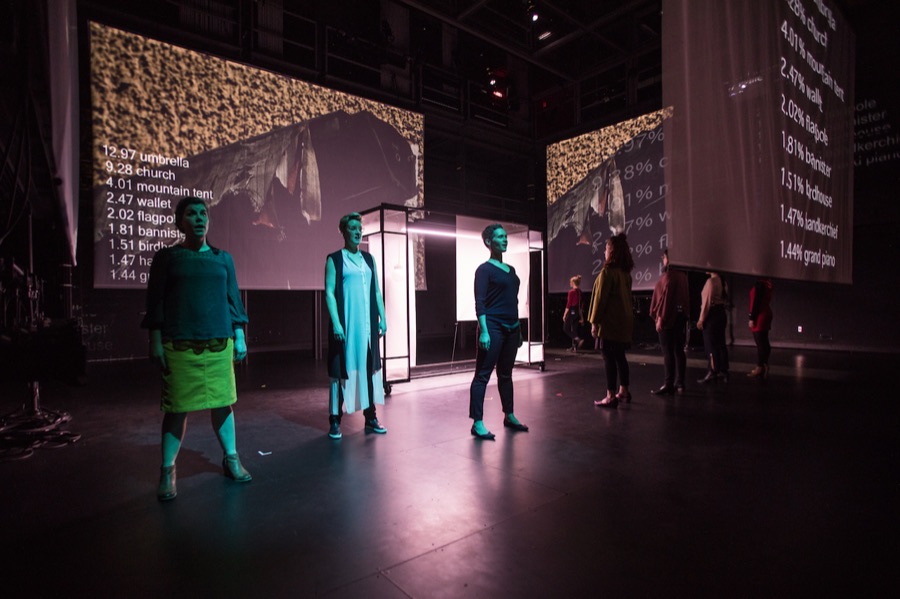 2018
THE_OPER&
Machine learning becomes a performer in an algorithmic opera at Duke. My contribution made image classification probabilities visible as a shifting field of interpretations.
With Bill Seaman, John Supko, Jim Findlay, Lorelei Ensemble, Keith Scretch
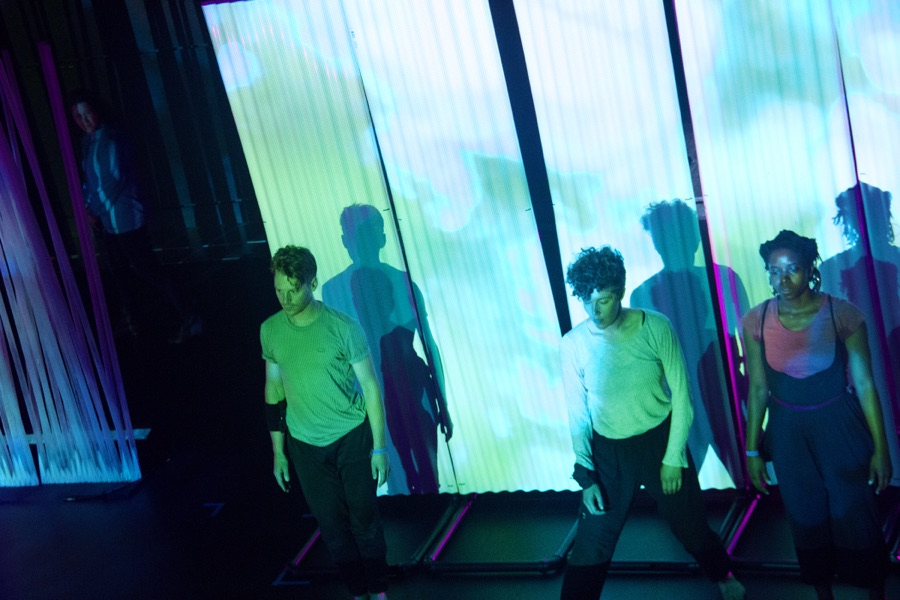 2017
These Borders That Keep Me Down
Redlining maps, live data, and moving bodies become an AfroFuturist performance with Duke’s SLIPPAGE Lab, presented at Moogfest.
With Slippage Lab, Duke University
Shown at Moogfest, Durham
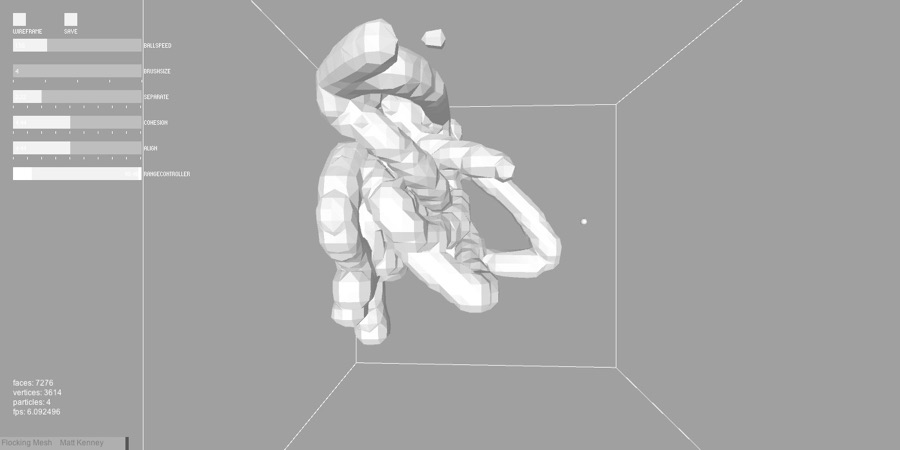 2015
Algorithmic Techtonics II
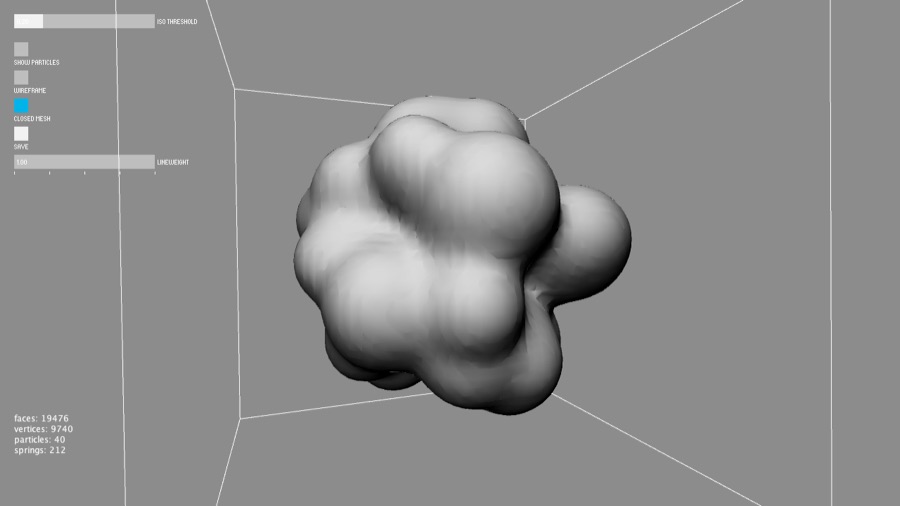
Flocking particles draw as they move. Their accumulated paths become sculptural meshes, ready to leave the simulation as OBJ or DXF files.
 2015
Algorithmic Techtonics
A sculpting tool made of competing forces. Tune a network of moving nodes and watch a surface find its shape.
 2015
Footwerk
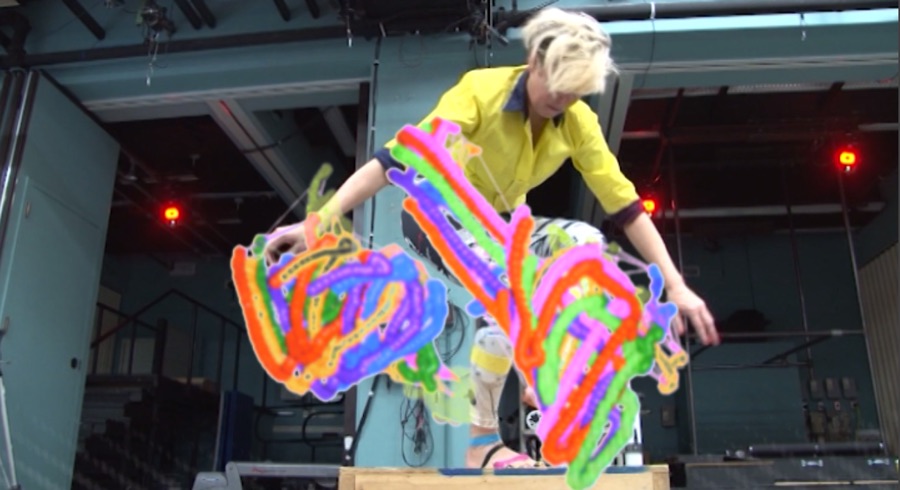
With Alex Murray-Leslie of Chicks on Speed, recorded movement becomes visual trails and synthesized sound. Exhibited at the Venice Biennale and ArtScience Museum.
With Alex Murray-Leslie (Chicks on Speed), Penn State Biomechanics Lab
Shown at 56th Venice Biennale · ArtScience Museum, Singapore
Quantified Self
A musical portrait built from 100 days online. Five SuperCollider instruments turn a radio host’s web activity into rhythm, texture, and counterpoint.
 2014
Biobehavioral Landscapes
Emotional life, given terrain. Data from 150 adults becomes a series of statistical landscapes, modeled in Grasshopper and milled from oak.
With Nilam Ram, Penn State Department of Human Development
 2014
Polar Ice Sonification
Four hundred thousand years of Antarctic change, compressed into sound. Six synthesized voices carry the motion of ice, ocean, sun, and temperature.
With Mark Ballora, Penn State Polar Center
 2014
Shale Hills Sonification
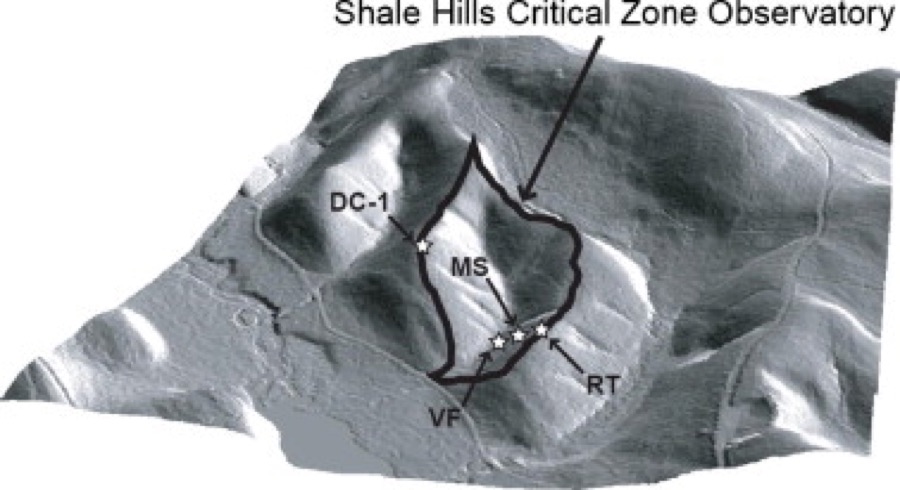
A watershed becomes an instrument. Three years of isotope measurements drive the sounds of rain, groundwater, and a moving stream.
With Mark Ballora, Penn State Critical Zone Observatory
The creative archive brings together earlier independent work and collaborations by Matthew Kenney. Each project retains its original date and collaborator credits.
Make something together