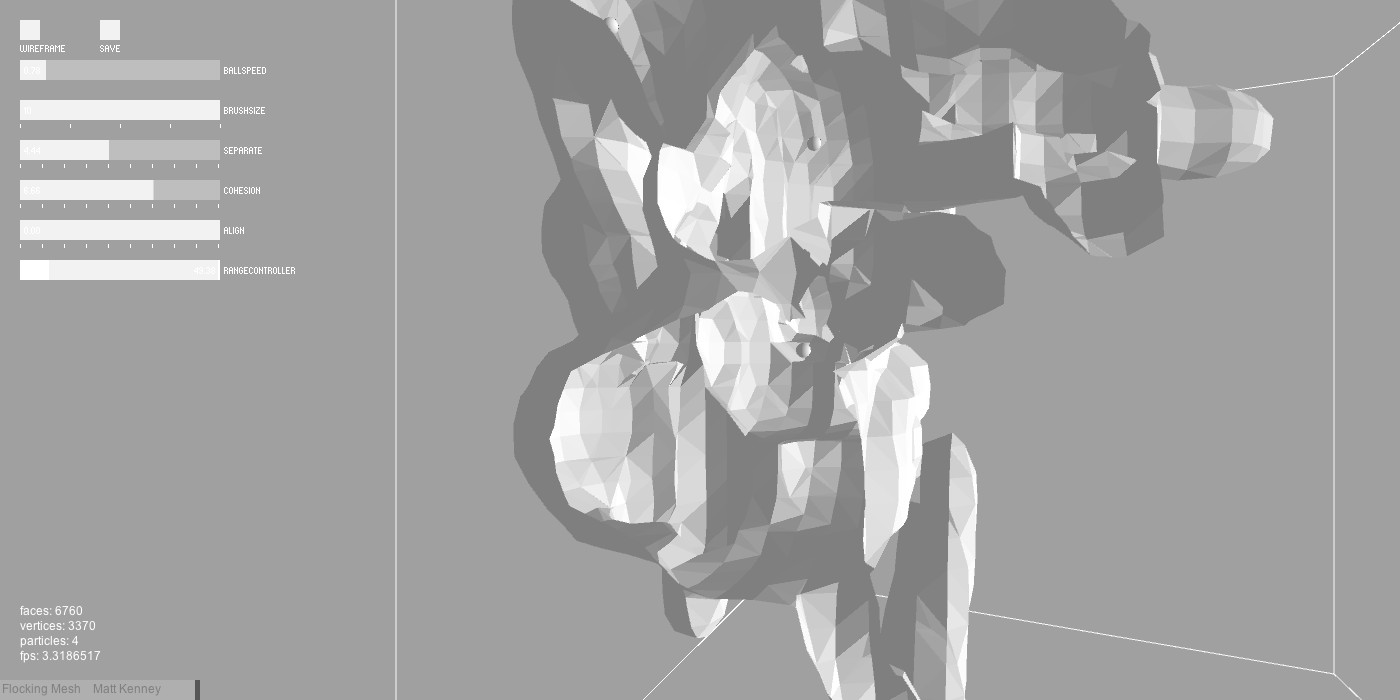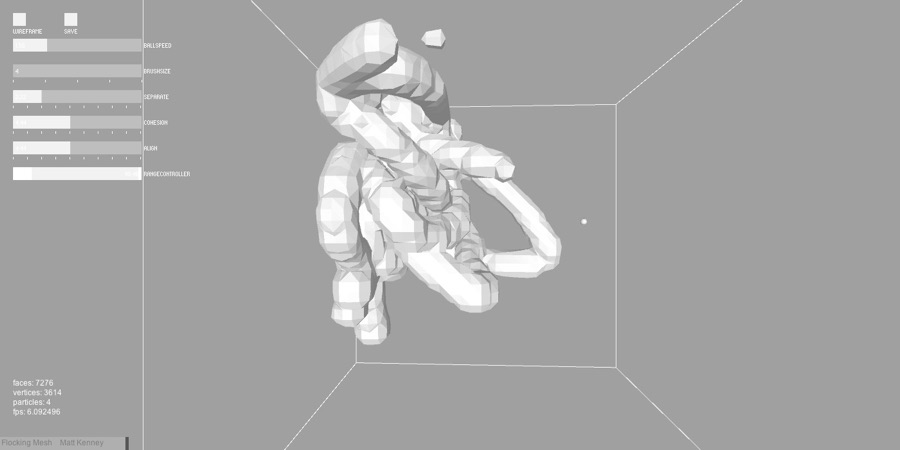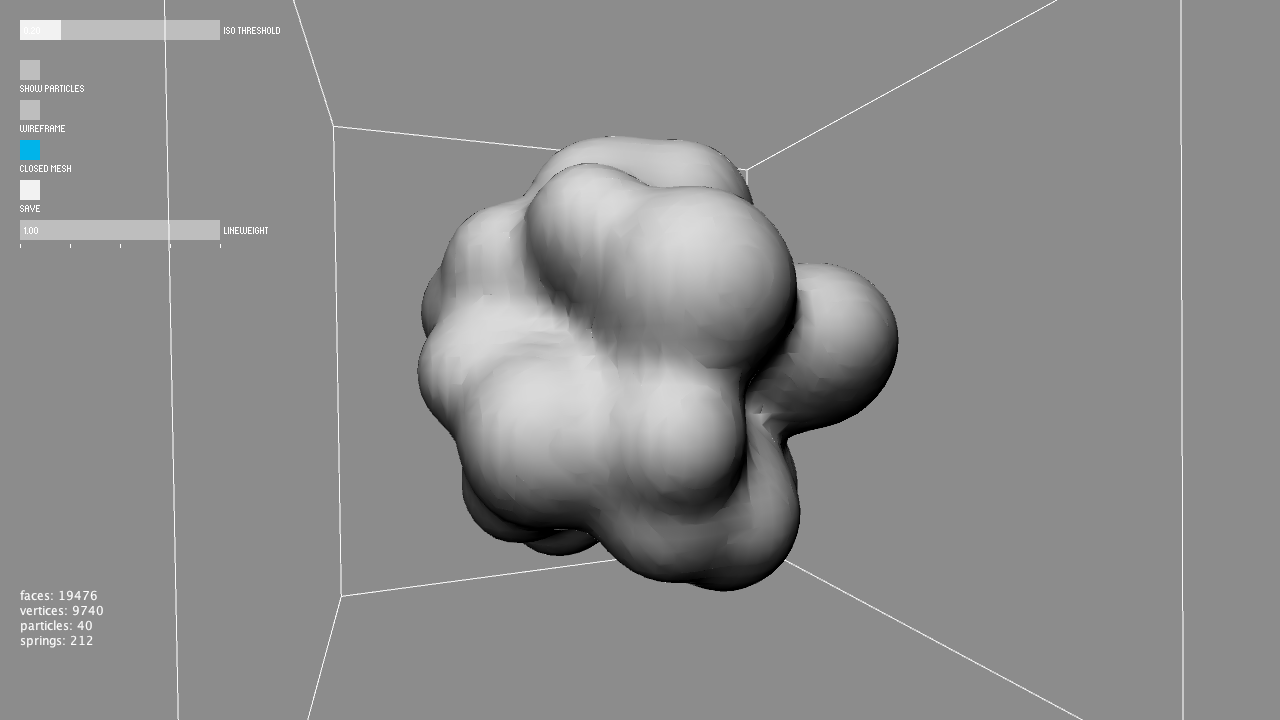
The object starts moving before it has a settled shape. Nodes pull toward one another, push apart, and tug at their connections. A surface wraps the network, turning those negotiations into a three-dimensional form.
I built Algorithmic Techtonics as an experimental CAD system for working directly with that behavior. The controls are forces, connections, and quantities. Change them while the system runs and the object changes with them: a swelling mass stretches, folds, or gathers into a different configuration.
Sculpt the rules.
At the center of the software is a network of virtual nodes joined by chords. Attraction draws each node toward its neighbors; repulsion pushes it away. Their competing effects keep the structure in motion. The network can oscillate and reorganize as the relationships between its parts change.
That makes a small set of variables surprisingly consequential. The number of nodes changes what the system has to work with. The attraction and repulsion settings change how those nodes behave together. Each adjustment reaches beyond the point where it began because the parts are connected.
This is where the design work happens: in the relationship between a rule and the form it produces. I can make an intervention, watch its consequences spread through the network, and intervene again. The software gives that feedback loop a visible body.
A skin for an invisible system.
A field of moving points has behavior. A mesh gives it a surface. Wrapping the network makes its changing structure readable as an object, with volume, edges, folds, and a silhouette.
The surface brings the simulation into a sculptural vocabulary. The same underlying interactions can suggest something cellular, something geological, or something caught between the two. Those associations come from the geometry as it develops. There is no need to prescribe a particular object at the start.
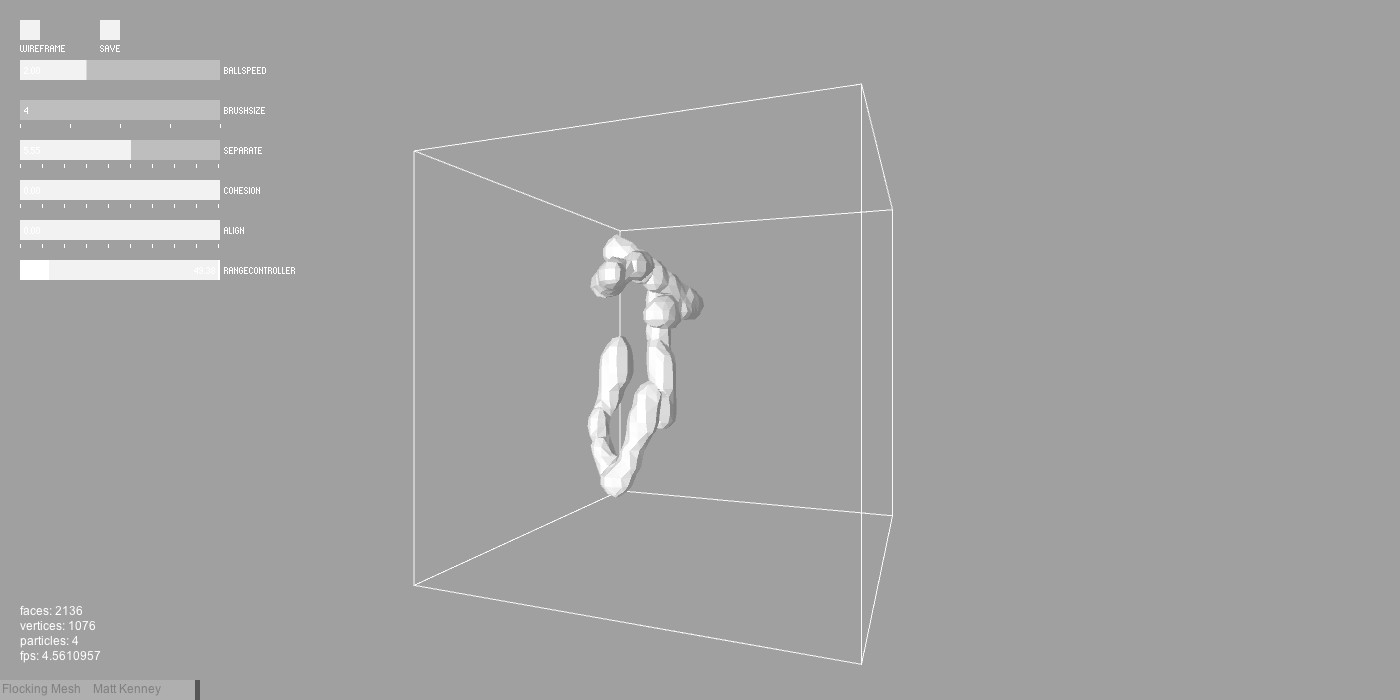
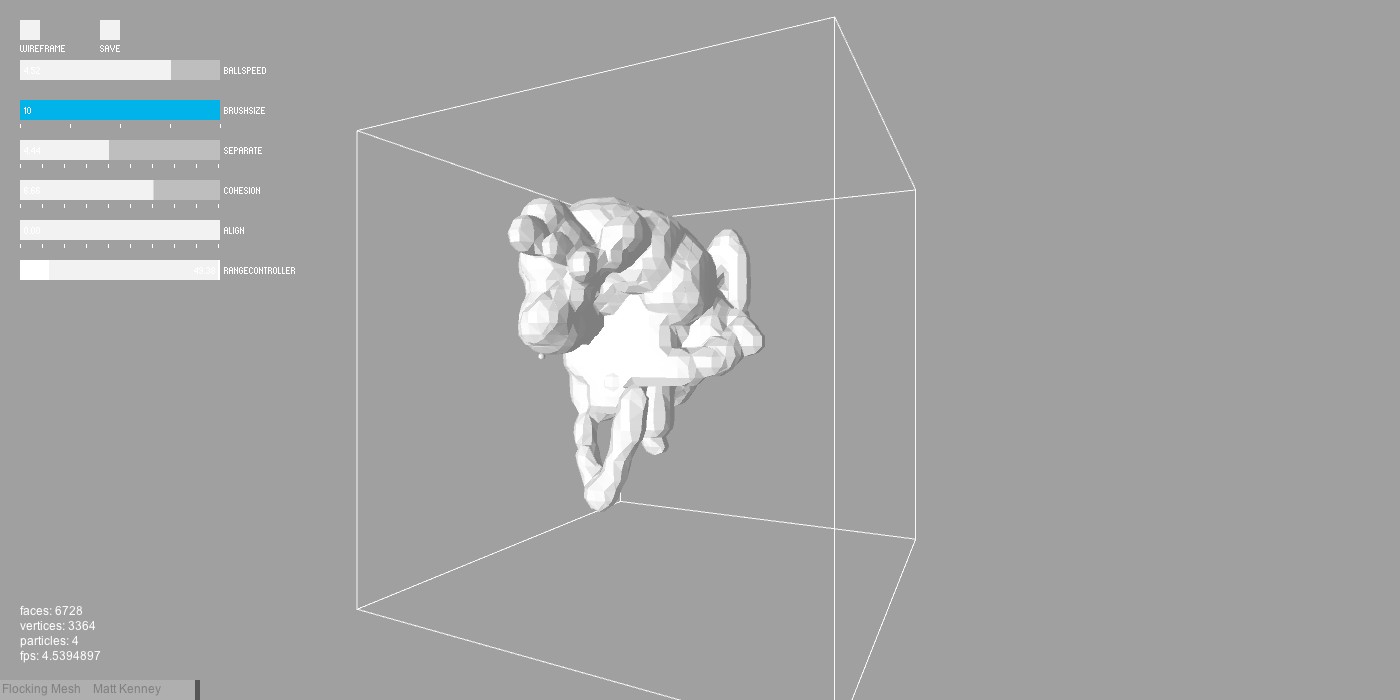
Keep a hand on the system.
The variables remain adjustable while the form is evolving. The node count, forces, and mesh settings are part of an ongoing exchange with the software. Watching becomes an active part of modeling: a way to decide which behavior to encourage, which configuration to interrupt, and which moment deserves a closer look.
What interests me here is the kind of authorship a tool can make possible. I designed the conditions, the controls, and the surface-making process. The resulting geometry arrives through their interaction over time. A form can still surprise its maker when the maker wrote the system that produced it.