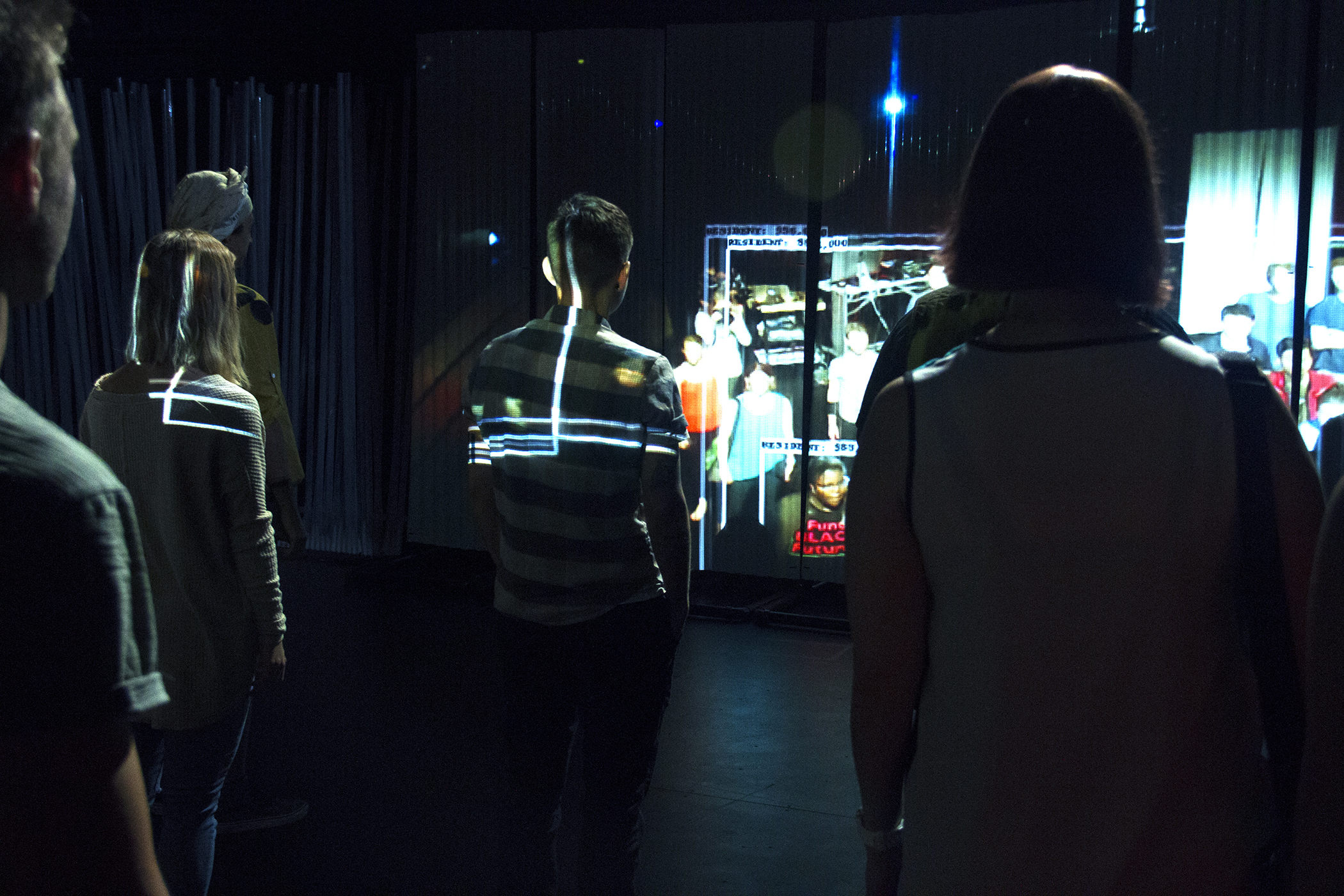
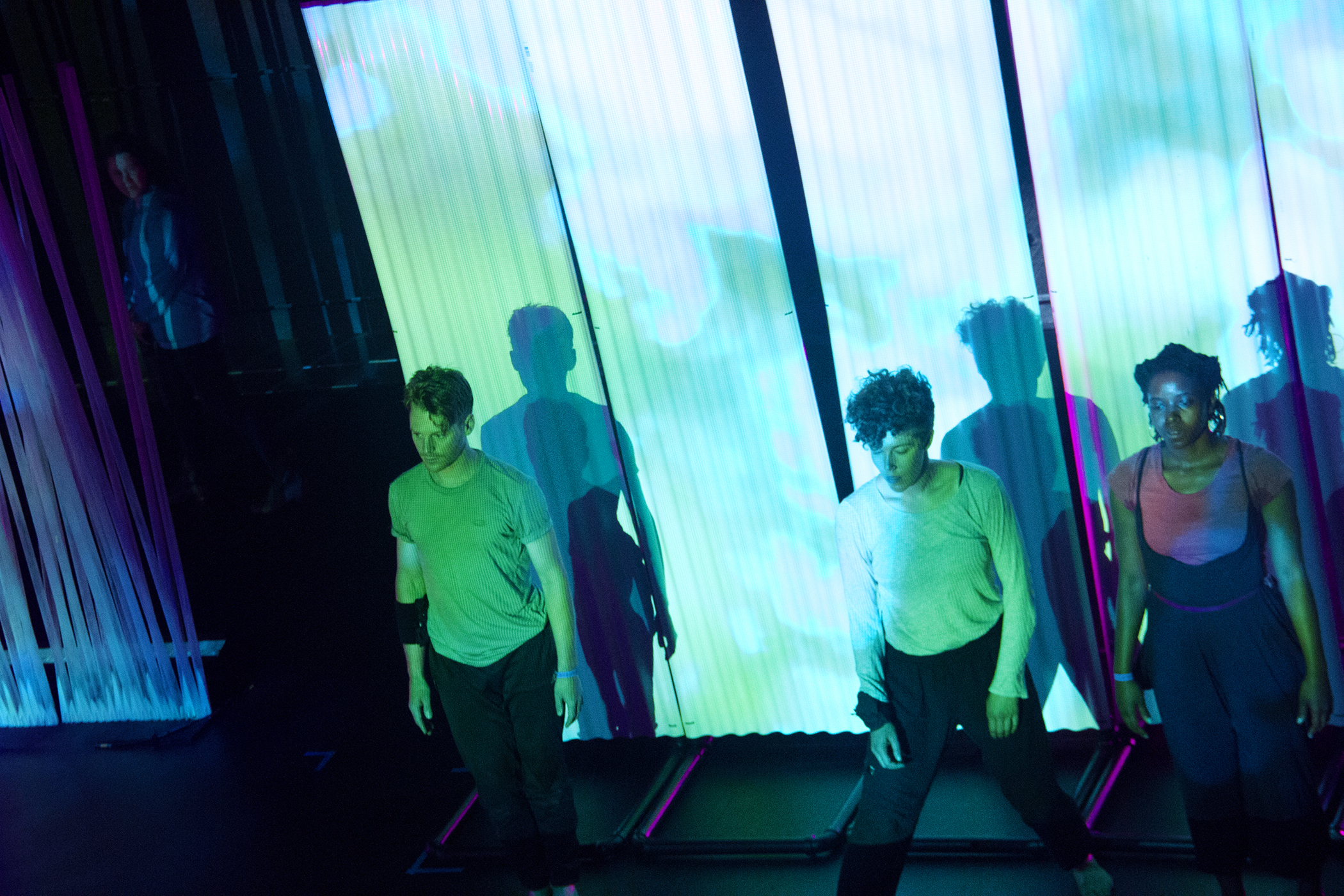
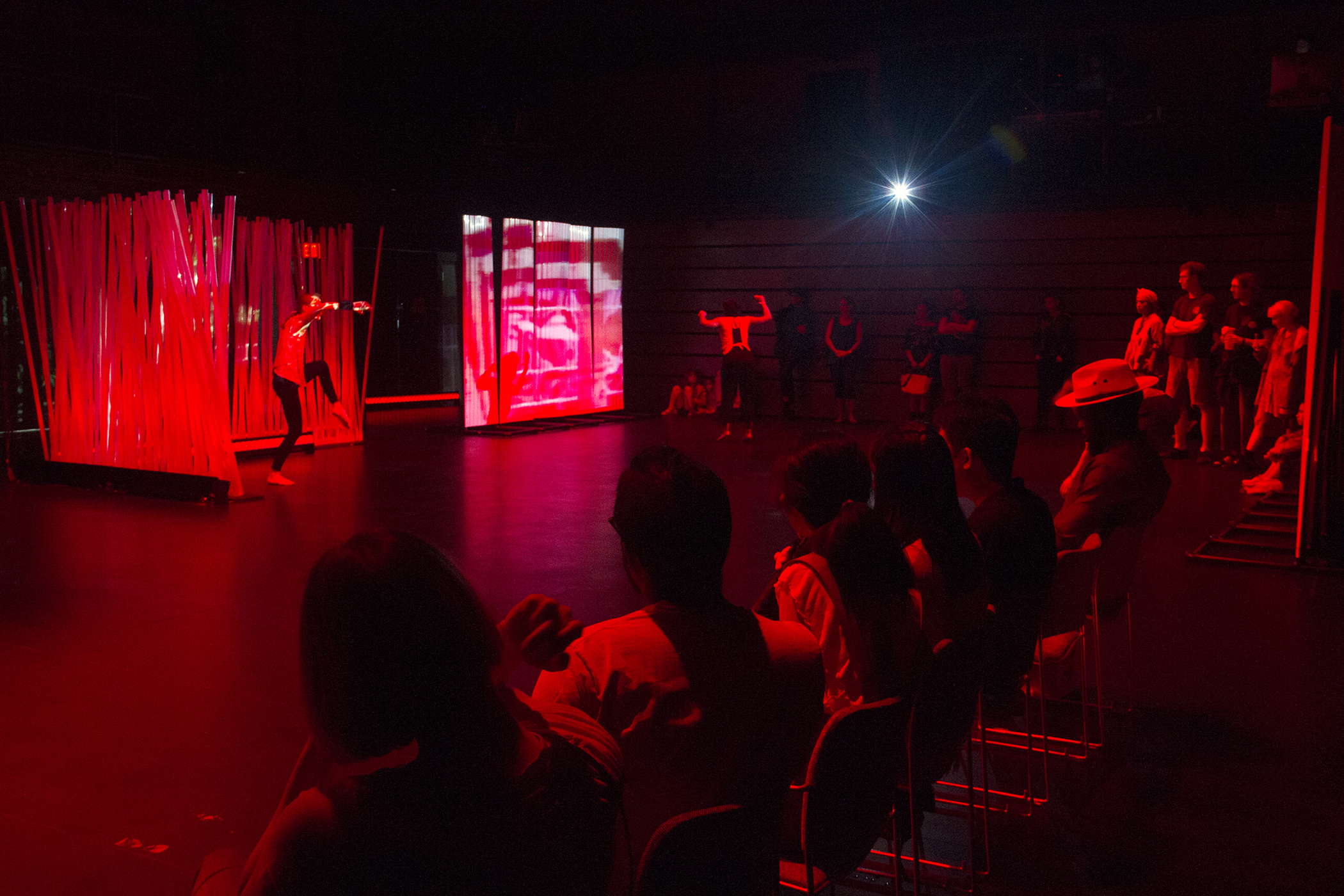
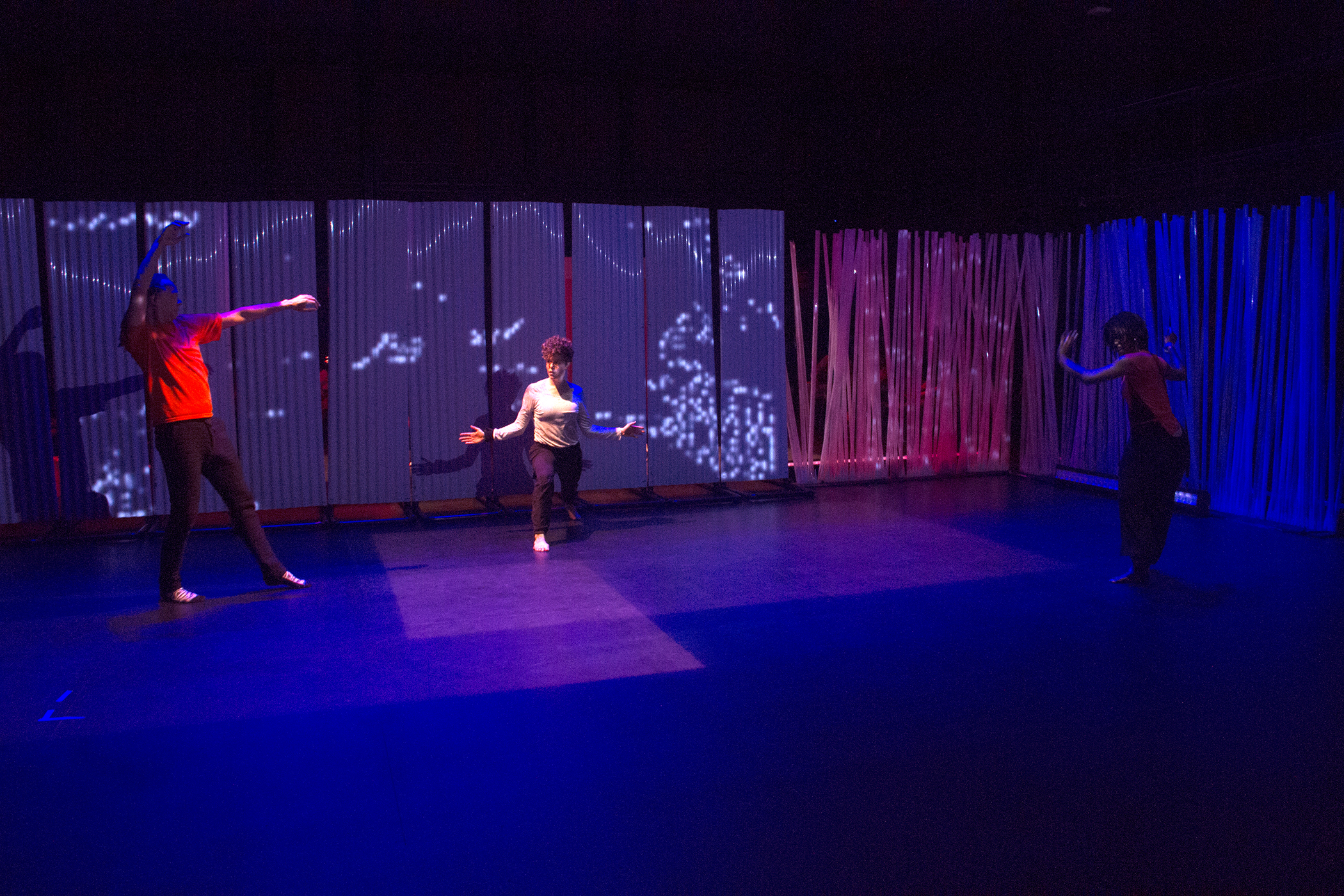
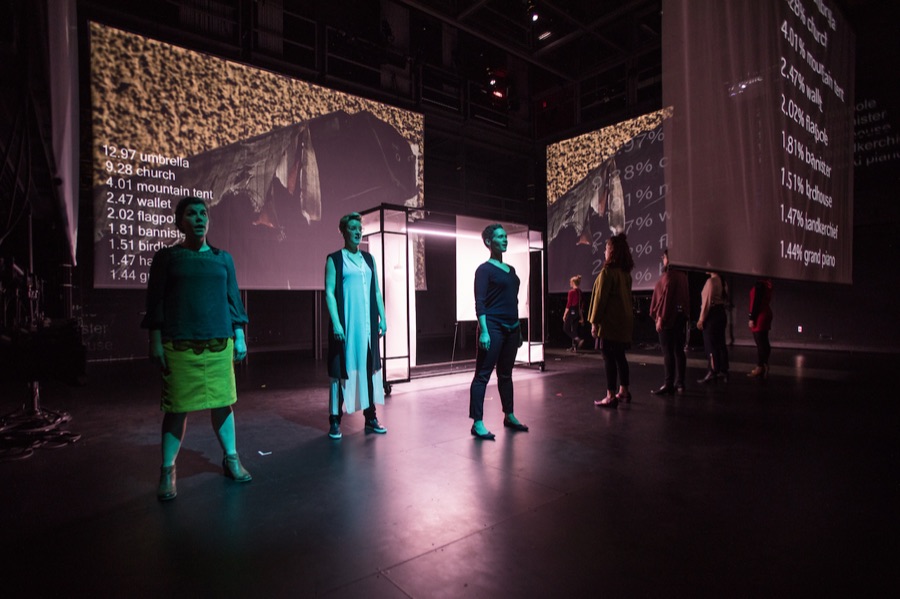
A line drawn on a map can shape a life. These Borders That Keep Me Down brought those lines into a room where people could move through their consequences in image and sound.
I collaborated with Duke University's SLIPPAGE Lab on this hour-long AfroFuturist performance, presented at Moogfest in Durham, North Carolina. It brought together Duke faculty, graduate students, community activists, and SLIPPAGE artists around a shared investigation of redlining, political gerrymandering, and the geographies of inequality.
Custom sonification interfaces, wearable technology, and live performance gave that investigation a physical form. Geographic data entered the performance as sound, and the performers' movements changed what could be heard.
Maps with consequences
The piece connected historical redlining with contemporary political gerrymandering. Both involve boundaries that organize access: to housing, resources, and political representation. Its starting questions were direct. Who draws those boundaries? Who benefits from them? What does it mean to live inside them?
The history of discriminatory lending gave the work a concrete foundation. Redlining restricted access to mortgages and insurance in neighborhoods with significant Black populations. The performance placed that history alongside electoral boundaries drawn to weaken the political power of communities of color.
These are mechanisms with effects that extend far beyond the map itself. Bringing them into performance created a way to consider how those abstract decisions enter everyday, bodily experience.
Turning geography into sound
The technical system used custom interfaces to process live feeds of geographic and demographic data. Historical redlining maps, electoral district boundaries, and socioeconomic indicators supplied material for SuperCollider synthesis engines.
Sonification establishes relationships between data and audible behavior. Here, it gave information about spatial inequality a duration and a presence in the room. A boundary or pattern could become part of an unfolding composition, available to hear alongside the movement and imagery of the performance.
The performers were also part of that system. Wearable sensors captured gestures and positions, which modulated the sonified data streams. Their bodies could intervene in the sound as the piece developed.
A performance that listened back
That connection created a feedback loop: movement changed the sound, and the sound shaped the choreography. The performance held geographic structure and physical action in an ongoing exchange.
SLIPPAGE's AfroFuturist practice gave that exchange its larger setting. This was an afrotechnopunk collaboration with artists and community participants, carrying questions about history, power, and possible futures. The technology supplied ways for the data and the performers to act on one another within that work.
The result brought a difficult subject into a shared sensory space. Maps supplied the structure; live sound and moving bodies made that structure something people could encounter together.