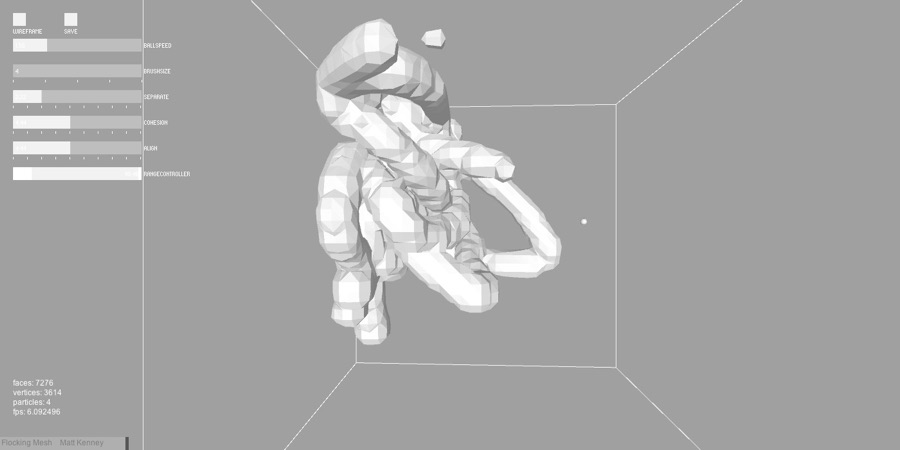
A distribution of emotional states becomes a landscape: ridges, concentrations, low ground. In Biobehavioral Landscapes, that landscape leaves the screen and becomes an object carved from oak.
Working with Nilam Ram and Penn State's Department of Human Development, I explored the passage from behavioral data to three-dimensional form. The project brings statistical modeling, parametric design, and digital fabrication into the same process. An abstract description of lived experience acquires a surface, a scale, and a material presence.
A landscape made from daily life.
The data came from 150 adults, aged 18 to 90, who reported on their daily lives, interactions, feelings, and health for nine weeks. Collection took place between May 2010 and September 2011. Those repeated reports provide a way to look at patterns across everyday experience.
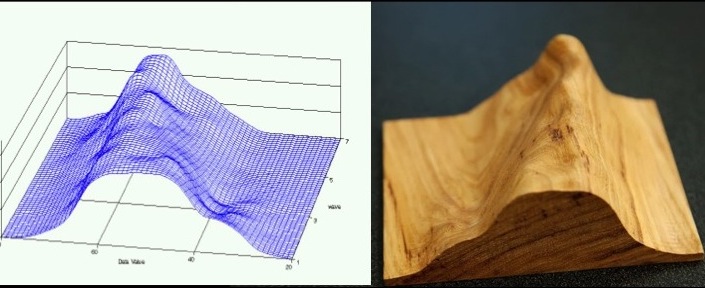
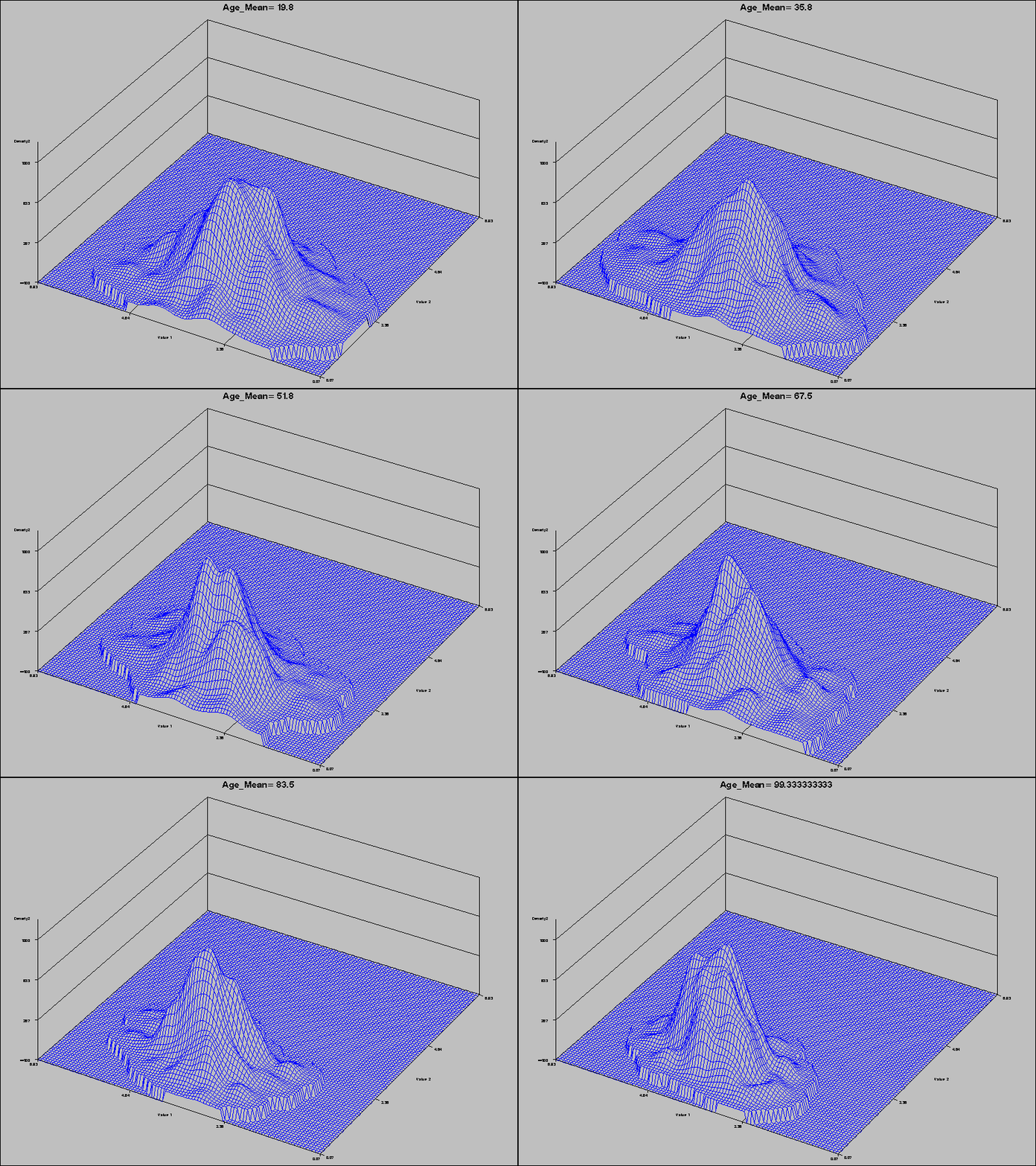
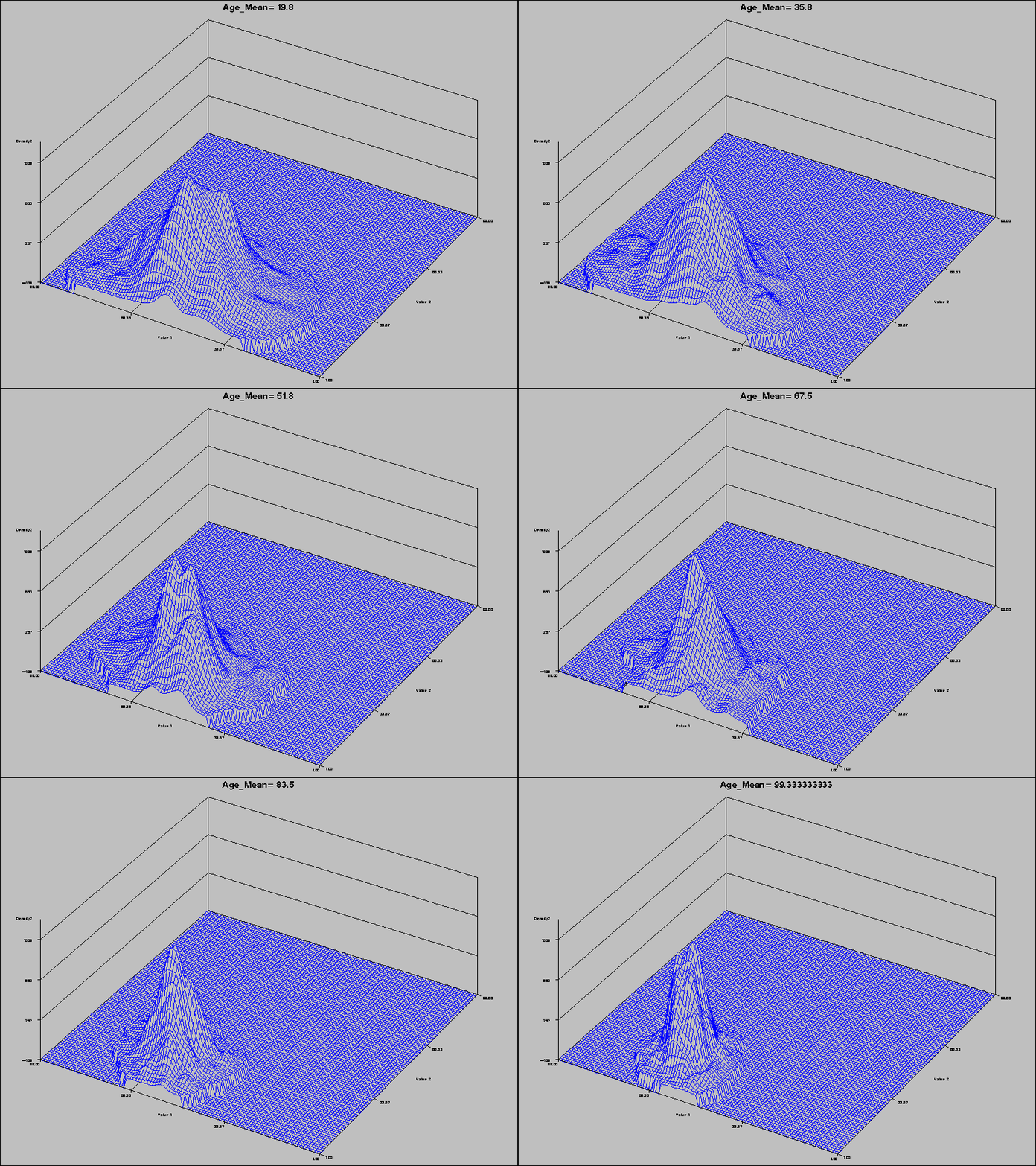
The landscapes are three-dimensional representations of multivariate density distributions. Their topography describes concentrations within the data: where particular combinations of states occur more frequently, and where they are less common. The shape gives those relationships a spatial organization that can be viewed from different angles.
In the work described by Ram and colleagues in 2013, behavioral landscapes offered a way to consider a person together with their circumstances. A landscape might describe patterns in an individual, patterns in their environment, or the transactions between the two. It also raises a question about change: how might the terrain shift as someone moves through a major life event?
Give the distribution a surface.
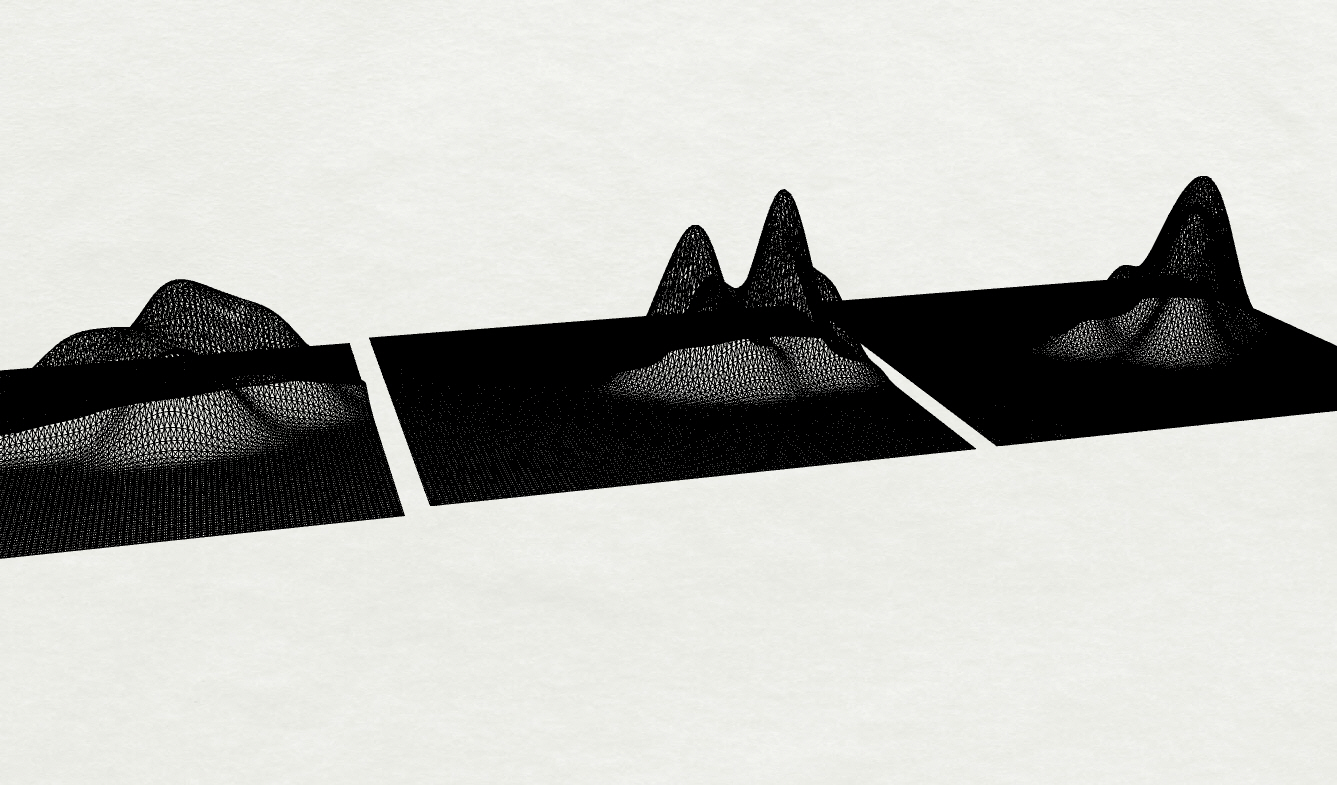
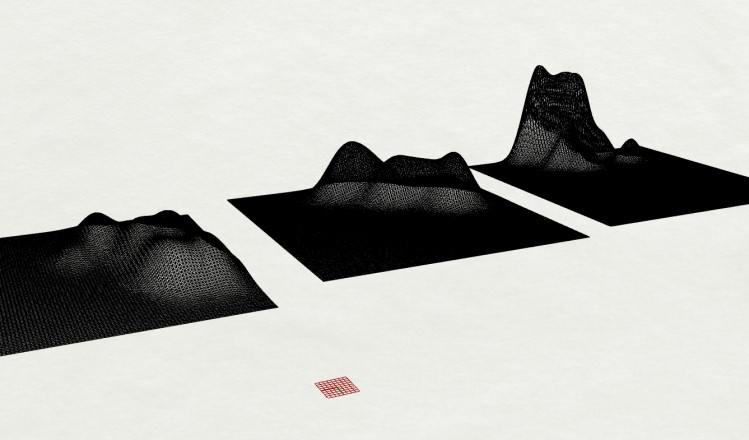
The models were developed in Rhino using Grasshopper. The parametric workflow connected the multivariate data to surface meshes, making it possible to move from a statistical representation toward geometry that could be fabricated.
The mesh matters because it is the meeting point of two kinds of description. One comes from the data and its distribution. The other comes from the object: its continuous surface, slopes, boundaries, and proportions. The same form has to carry both.
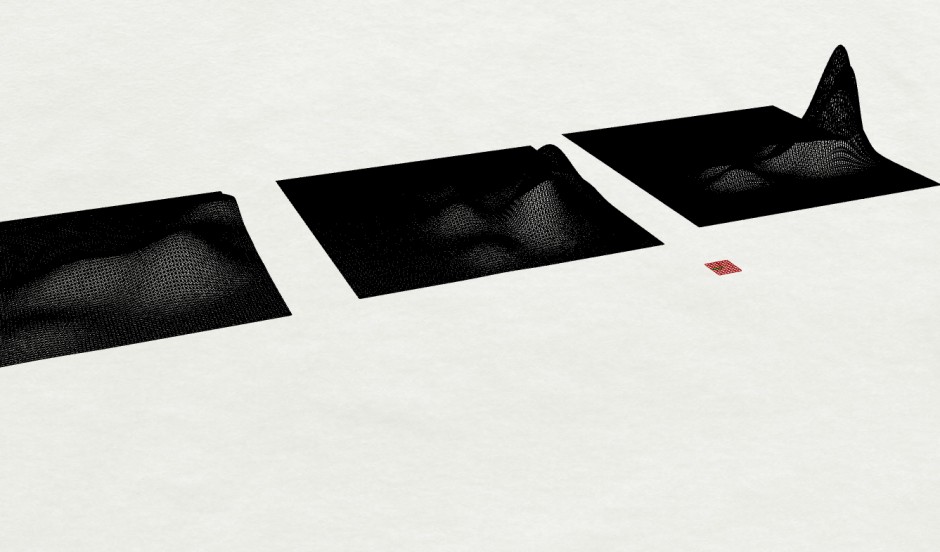
The wireframe views keep that construction visible. They show a landscape assembled through geometry, with the changing density of the underlying observations expressed as a topography.
Statistics with grain and weight.
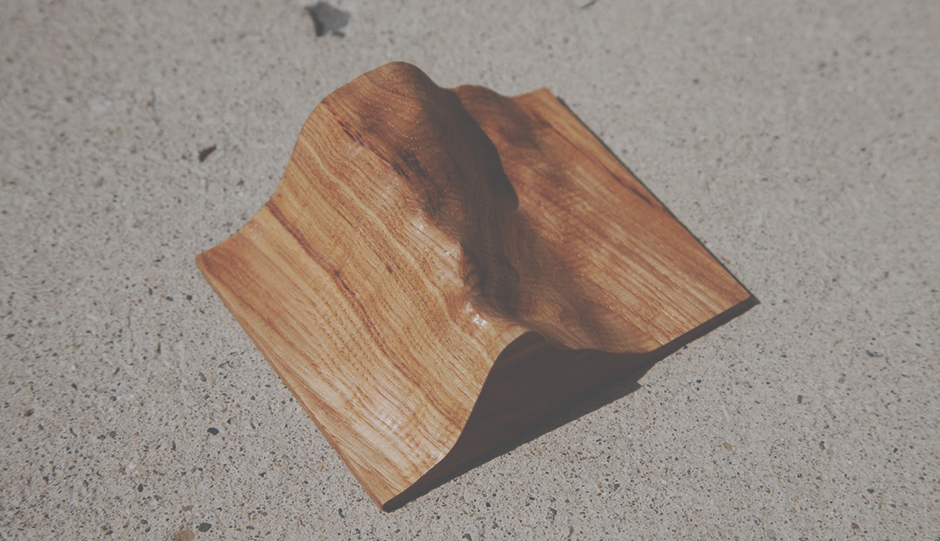
The digital models were carved from solid oak on a five-axis CNC mill. Milling translates the surface into a physical contour; the wood contributes grain, texture, and a warmth the screen cannot supply.
That translation gives the work a different pace. A sculpture can be approached from another side, examined at close range, or understood through the way light moves across a ridge. Its form stays present while the viewer moves around it.
The result brings an intimate subject into a surprisingly physical register. The object begins with reports about ordinary moments in people's lives. It ends as a landscape with enough presence to occupy a table. What draws me to that passage is the connection it makes between a statistical pattern and something a person can encounter with their body.